If you are planning to build a house in Nepal, you probably have a hundred questions and no clear place to start. How much will it cost? Should you go for 2.5 storey or 3 storey? What permits do you need? This guide answers all of that in plain language, without the jargon. Whether you are building in Kathmandu, Pokhara, or a smaller city, the basics are the same and we will walk through them one by one.
What Type of House Makes Sense for Your Land?
Before you talk to any contractor or architect, you need to have a rough idea of what you are working with. Your land size, your family size, and your budget will shape every decision from here on.
2.5 Storey vs 3 Storey House in Nepal
This comparison comes up constantly among first-time builders and for good reason. Both options work well, but they suit different situations.
A 2.5 storey house gives you two complete floors and a half floor on top. That half floor usually becomes a bedroom, a small prayer room, or extra storage, and it sits under a sloped roof. Most families in urban Nepal go with this layout because it keeps costs lower, fits within most municipality height limits, and still gives you plenty of living space. If you are building on 3 to 4 aana of land and your budget is in the mid range, this is likely the smarter choice.
A 3 storey house gives you three complete floors. This works well for joint families who need separate living areas for two generations, or for anyone who wants to rent out one floor and offset the mortgage. The trade-off is a higher construction cost, more complex structural work, and stricter municipality approvals. You will need to confirm that your plot size satisfies the Floor Area Ratio rules in your area before committing to this option.
Here is a quick side-by-side to help you decide:
| Feature | 2.5 Storey | 3 Storey |
|---|---|---|
| Cost | Lower | Higher |
| Space | 2 full floors plus a half | 3 complete floors |
| Best suited for | Nuclear families, smaller plots | Joint families, rental income |
| Municipality approval | Usually straightforward | Requires FAR verification |
| Structural complexity | Moderate | More demanding |
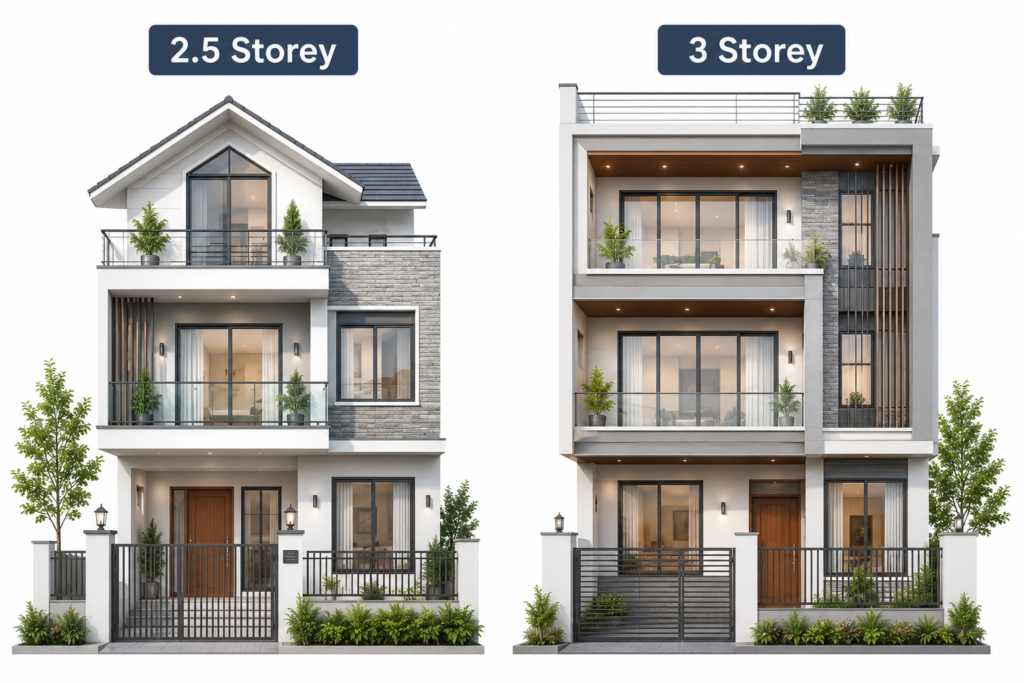
For most people reading this, especially if it is your first build, the 2.5 storey option will serve you better. It is easier to manage, easier to approve, and easier on the budget.
Building on Small Land: 3 Aana and Below
A lot of builders in Kathmandu and Pokhara are working with 2.5 to 4 aana of land. That is not a lot of space, but it is enough if you plan it well.
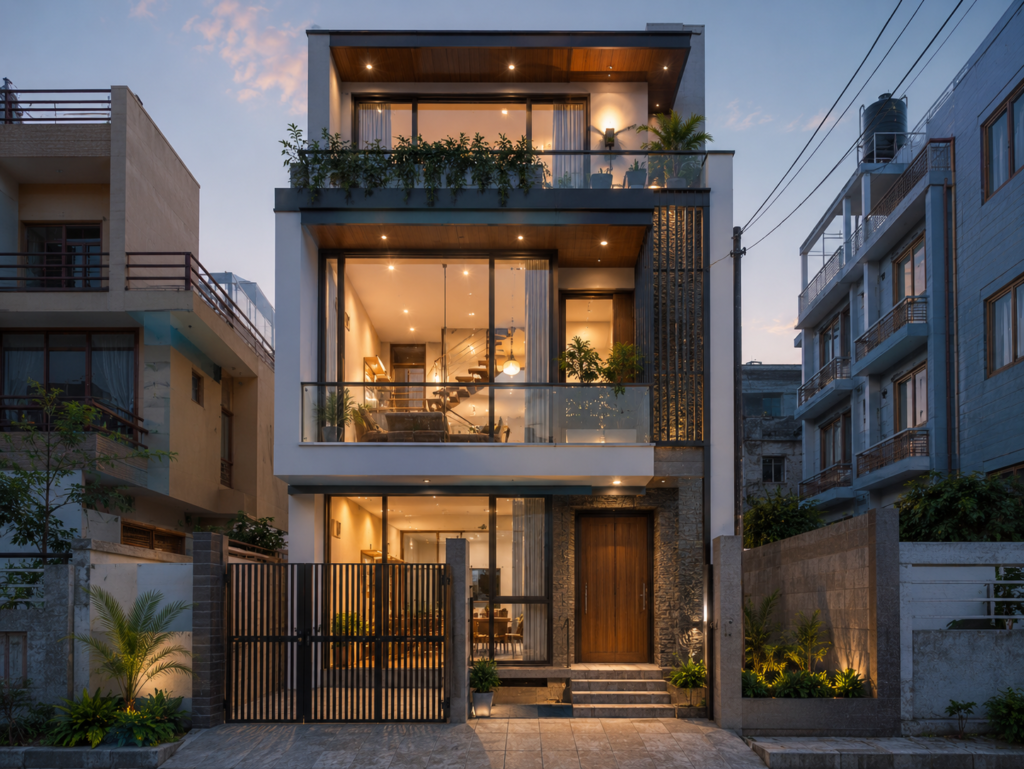
The key is thinking vertically rather than horizontally. Instead of spreading the house across the ground floor, you go up. Open floor plans help too because removing unnecessary walls between rooms makes the space feel larger than it actually is. Built-in wardrobes and under-stair storage take care of clutter without eating into living space. And combining the dining and living area into one open space is a popular choice for smaller plots that works really well in practice.
On a 3 aana plot, which is roughly 1,017 square feet of land, a good architect can fit a comfortable 3 to 4 bedroom home if the design is done thoughtfully. See modern house design ideas for Nepal here.
Modern or Traditional: What Are Builders Choosing in 2026?
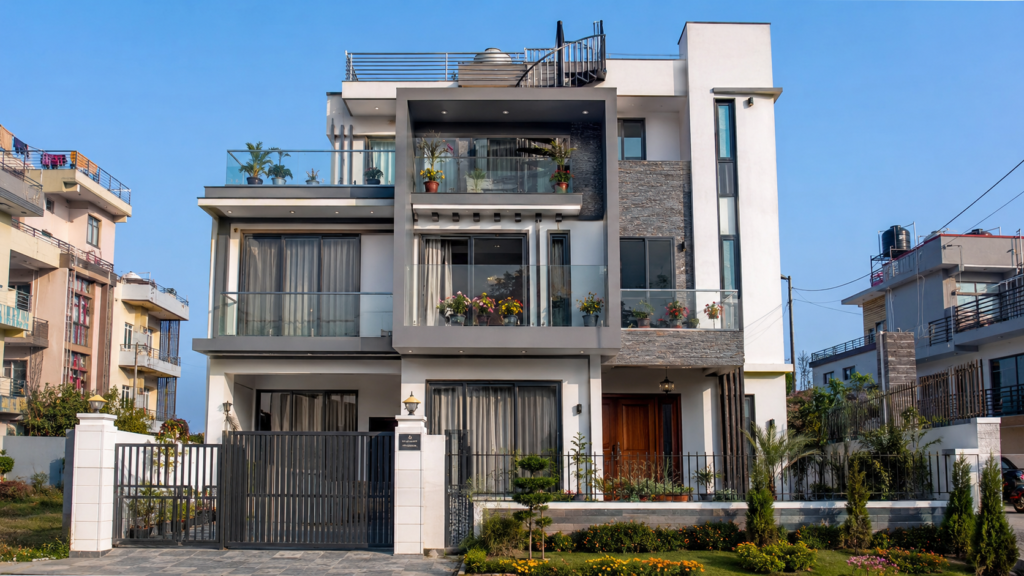
Modern RCC construction is what most urban builders are going with right now, and there are practical reasons for that. Reinforced concrete frames are earthquake resistant, low maintenance, and have strong resale value. Large windows and open layouts are easier to achieve with modern construction methods.
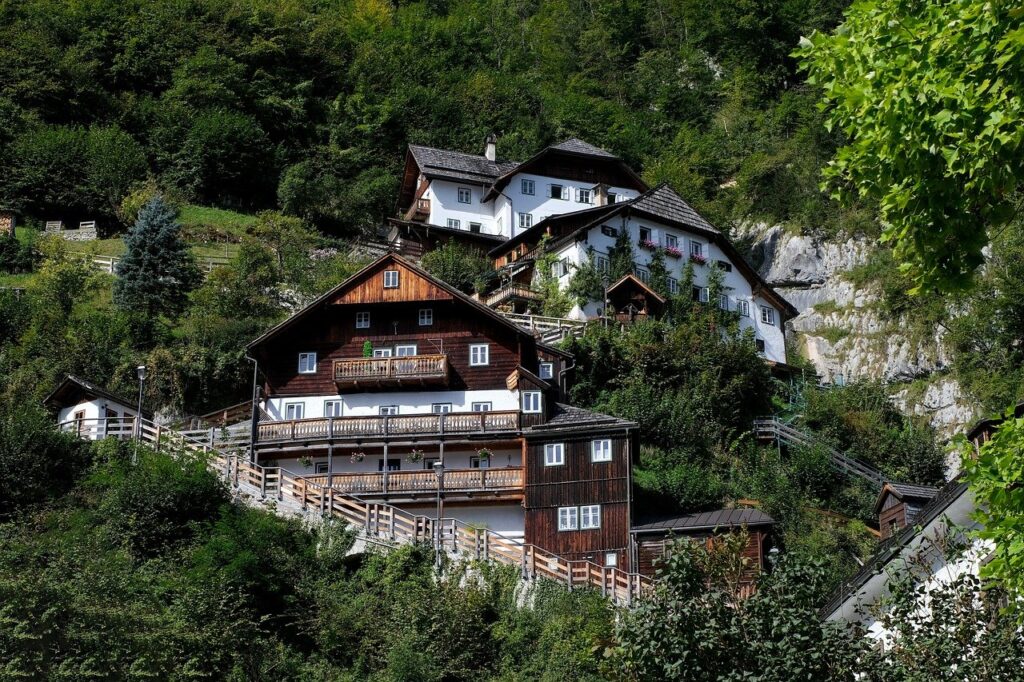
Traditional designs using wood, brick, and sloped tile roofs are still common in rural areas and among families who want to preserve that aesthetic. They cost less to build using local materials, but they need more maintenance over the years and are harder to make fully earthquake safe.
If you are in a city or a growing town, a modern or contemporary design is the sensible direction in 2026. Browse Nepal house design options here.
House Construction Cost in Nepal 2026
Let us talk numbers, because this is where most first-time builders get caught off guard.
What Does It Cost Per Square Foot?
| Build Type | Cost Per Sq Ft (NPR) |
|---|---|
| Economy or basic | 3,500 to 4,500 |
| Standard modern | 4,500 to 6,000 |
| Premium or high end | 6,000 to 8,500 and above |
| Traditional mud or brick | 1,500 to 2,500 |
These numbers cover the structural work and basic finishes. They do not include land cost, architect fees, permits, or interior upgrades.
Realistic Budget for a House on 3 Aana Land
For a standard modern 3-bedroom, 2.5 storey house on 3 aana land with around 1,200 to 1,500 square feet of built area, here is a realistic cost range:
- Economy build: NPR 42 to 67 lakh
- Standard build: NPR 54 to 90 lakh
- Premium build: NPR 72 lakh to 1.2 crore and above
These are estimates. Your actual cost will depend on your location, the contractor you hire, and the finishes you choose. Use this house construction cost breakdown tool to get a more specific figure.
Costs That Catch First-Time Builders Off Guard
This is the section most guides skip, so pay attention here.
Permit and approval fees are not small. Between municipality building permits, DUDBC processing, and setback approvals, you could be looking at an extra 10 to 12 percent on top of your construction budget.
Design and engineering fees are often forgotten. A licensed architect will typically charge NPR 15 to 50 per square foot. This is not optional if you want a safe, approved building.
Foundation surprises happen more than people expect. If a soil test reveals soft or waterlogged ground, your foundation needs to go deeper and cost more than originally planned. Always do the soil test before finalising your budget.
Labour costs rise during peak season. Construction work in Nepal tends to spike between October and February. If you are starting your project in that window, factor in the higher labour rates.
Finishing is a separate budget. Many contractors quote for structure only. Flooring, tiles, paint, kitchen fittings, bathroom fixtures, doors, windows, and electrical work are all extra. This phase typically adds 25 to 35 percent on top of the structural cost.
See a full cost breakdown with finishing estimates here.
How to Build a House in Nepal: Step by Step
Here is the full process from start to handover. Each step matters and skipping any one of them usually creates problems down the line.
Step 1: Verify Your Land
Before spending a single rupee on design, get your land documents checked. Confirm the lalpurja, check for any ownership disputes, and get a professional survey done to confirm the exact boundaries and area. This protects you legally and gives your architect the correct measurements to work with.
Step 2: Get Your Building Permit
No legal construction happens in Nepal without a building permit. You apply to your local municipality or to the Department of Urban Development and Building Construction (DUDBC) if you are outside a municipality. The documents you need include architectural and structural drawings, a site map, your land ownership papers, and the application forms with applicable fees.
Permit processing can take anywhere from two weeks to two months depending on where you are. Start this process early because any delay here pushes back your entire timeline.
Step 3: Hire a Qualified Architect
A lot of first-time builders try to cut costs here and it almost always backfires. A good architect does more than draw pretty plans. They make sure your home works for your family, fits your land properly, meets the building code, and accounts for things like ventilation, natural light, and future expansion.
When you are selecting someone, look for a licensed professional with a portfolio of completed residential projects in Nepal, clear pricing, and real experience with earthquake-resistant design. See house design options with price here.
Step 4: Get the Structural and Seismic Design Right
Nepal is in one of the highest seismic risk zones in the world. The 2015 Gorkha earthquake destroyed nearly 600,000 homes and reminded every builder in the country that structural shortcuts are not just costly but genuinely dangerous.
Your structural design must comply with Nepal’s National Building Code NBC 105 for seismic resistance. In practice, this means RCC frame construction with properly tied columns and beams, load distribution across all floors, a deep enough foundation anchored in stable soil, and seismic bands at regular intervals. Do not negotiate on this.
Step 5: Monitor Construction Quality
Once the build starts, the quality of what goes into the walls and foundations determines how safe and durable your home will be. You or someone you trust should be on site regularly to check:
- Rebar placement and foundation depth before concrete is poured
- Column and beam reinforcement before casting
- Floor slab thickness and proper curing time
- Wall alignment before plastering begins
- Electrical and plumbing rough-in before walls are closed up
Catching a problem at this stage costs far less than fixing it after the walls are up.
Step 6: Finishing, Fixtures, and Final Checks
The finishing phase covers flooring, paint, kitchen and bathroom fittings, doors, windows, grills, electrical fixtures, and exterior work. This takes roughly two to four months and accounts for a significant portion of your total budget. Do not rush it. The finishing is what you live with every day. Browse house design plans and finishing ideas here.
Choosing the Right House Design
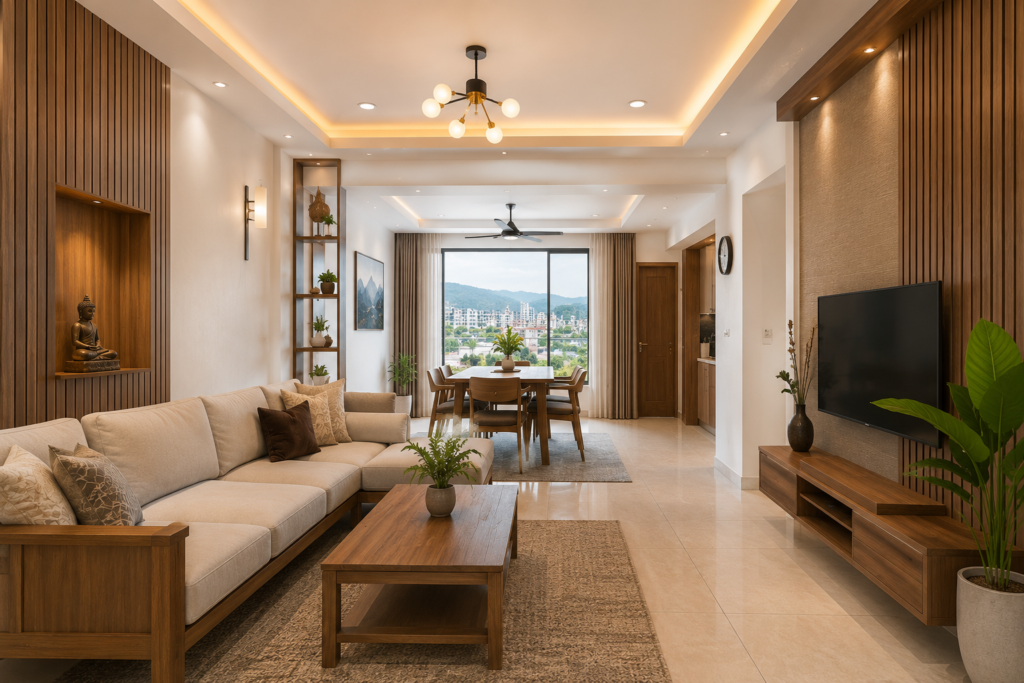
Good design is about how your home works for your family on an ordinary Tuesday, not just how it looks in photos.
4-Room House Designs for Nepal
The most common layout for Nepali families is three bedrooms plus one room used as a prayer room, study, or guest room. On a standard urban plot, this fits well into a 2 or 2.5 storey structure and keeps construction costs reasonable for a family of four to six. See 4-room house design ideas for Nepal here.
Features Worth Spending On
Even when the budget is tight, some things are worth prioritising:
Cross-ventilation is one of them. Placing rooms so that natural air moves through the house cuts long-term cooling costs and makes the home far more comfortable in summer. South-facing windows bring in good natural light through Nepal’s winters. A small dedicated utility area for washing and drying keeps the rest of the house cleaner and more organised. Covered parking is particularly useful in cities like Pokhara where the monsoon runs long and heavy. And if there is any chance you will want to add a room or a floor later, ask your engineer to build in structural provisions for that now. It costs very little at the construction stage and saves a lot of money later.
Mistakes That First-Time Builders Make in Nepal
Most of these are avoidable if you know what to watch for.
Skipping the soil test is the most common one. Weak or waterlogged soil needs a stronger foundation, and if you find that out after you have already budgeted for a standard one, it hurts.
Hiring unlicensed contractors to save money is another. It looks like a good deal until something goes wrong and you have no legal recourse.
Starting construction before getting permits approved is surprisingly common and always creates trouble. Municipalities can and do stop construction mid-build and issue fines for unpermitted work.
Underbudgeting for finishes catches almost every first-time builder. The structure is maybe 65 to 70 percent of the total cost. People forget that the remaining 30 to 35 percent still needs to be funded.
Changing the design once construction has started is expensive. Every design change during construction means rework, wasted materials, and delays. Finalise everything on paper before anything is built.
And never compromise on seismic design. In a country with Nepal’s earthquake history, non-engineered construction is both illegal and a genuine safety risk.
FAQ
How much does it cost to build a house in Nepal in 2026?
Construction costs range from NPR 3,500 to over NPR 8,500 per square foot depending on quality and location. A standard 3-bedroom house on 3 aana land typically falls between NPR 54 and 90 lakh, not counting land, permits, or finishing costs.
What is the difference between a 2.5 storey and a 3 storey house in Nepal?
A 2.5 storey house has two full floors and a half floor under a sloped roof, often used as a bedroom or storage. A 3 storey house has three complete floors. The 2.5 storey option costs less, fits more municipality guidelines, and suits most families on smaller plots. The 3 storey option works better for joint families or when one floor will be rented out.
Do I need a building permit to build a house in Nepal?
Yes, a building permit is required by law. You submit your architectural and structural drawings to your local municipality or DUDBC and wait for written approval before breaking ground. Building without a permit risks fines and demolition.
What is the best house design for 3 aana land in Nepal?
A 2.5 storey modern house with an open floor plan, built-in storage, and 3 to 4 bedrooms works well on 3 aana land. The key is designing vertically to make the most of limited ground area.
How long does it take to build a house in Nepal?
From design to handover, most residential builds take 12 to 24 months. Roughly one to two months go into design, another one to two months for permits, and nine to eighteen months for construction and finishing. Permit delays and material shortages are the most common reasons projects run long.
Building a house in Nepal takes patience, planning, and a team you can trust. The builders who come out of it happy are almost always the ones who invested time upfront in getting the design right, the permits sorted, and the budget planned with honest numbers. Start with a good architect, do not skip the seismic engineering, and build with a permit. Everything else follows from those three things.
Follow AS Designs for More House Design Ideas
If you found this guide useful, AS Designs Studio posts regular content on house design, construction tips, and real project updates across their social channels. Worth following if you are actively planning a build.
Facebook: Stay updated with new projects, design inspiration, and construction progress from real builds across Nepal. Follow AS Designs on Facebook
Instagram: See completed home designs, interior work, and before-and-after project photos. Good visual reference if you are still exploring styles. Follow @asdesignsstudios on Instagram
YouTube: Watch construction walkthroughs, design breakdowns, and Nepal-specific building guides from the AS Designs team. Subscribe on YouTube
Or if you are ready to talk about your project, you can reach the team directly at +977 9860115463 or visit housedesigninnepal.com to get a free quote.