Introduction: Why Cement Prices Matter for Your Nepal Dream Home
If you’re a Non-Resident Nepali planning to build a house back home, understanding cement price in Nepal 2025 is one of the first financial hurdles you’ll face. Cement typically makes up 15–20% of your total construction budget, so even a small per‑bag fluctuation can significantly impact your remittance planning. In this guide, we break down the latest OPC and PPC rates as of early 2025, explain why prices vary between the Kathmandu Valley and rural districts, and share practical tips that help NRNs like you build within budget — without compromising on quality.
As a Kathmandu‑based construction company specializing in NRN projects, GharNaksa has deep experience translating your foreign‑earned savings into strong, code‑compliant homes. Whether you’re in Pokhara, Birgunj, or a remote hill village, this article will give you the numbers and context you need to start smart conversations with your contractor.
What Affects Cement Prices in Nepal?
Before we dive into brand‑wise rates, it helps to know what moves the needle on cement price in nepal 2025. Five factors consistently shape the market:
- Brand reputation and manufacturing technology – Premium brands like Shivam or Jagdamba invest in modern kilns and stringent quality checks, which is reflected in their pricing.
- Raw material and energy costs – Limestone availability, imported coal, and grid electricity tariffs directly influence production expenses.
- Transportation and logistics – Moving 50 kg bags from factories in Hetauda or Udayapur to hill districts can add NPR 50–100 per bag, especially during monsoon when roads are damaged.
- Regional demand‑supply dynamics – Reconstruction projects, hydropower development, and seasonal construction booms can create local shortages.
- Government policy – Tax changes, import duties on clinker, and Nepal Rastra Bank’s monetary policy all play a role.
These variables explain why you’ll often see different quotes from the same brand — one dealer might have old stock purchased at a lower cost, while another has already factored in a recent fuel surcharge.
Cement Price in Nepal 2025: OPC vs. PPC
For a typical house in Nepal, you’ll use two main types of cement: Ordinary Portland Cement (OPC) and Portland Pozzolana Cement (PPC). OPC offers higher early strength, making it ideal for RCC columns, beams, and slabs. PPC, blended with fly ash, delivers better durability and resistance to chemical attacks — perfect for plastering, brickwork, and foundations in damp soil. When you’re calling suppliers, always clarify which type the quote refers to.
Ordinary Portland Cement (OPC) Rates in 2025
Based on market surveys across major cities, here are the indicative OPC cement prices in Nepal for 50 kg bags (updated early 2025):
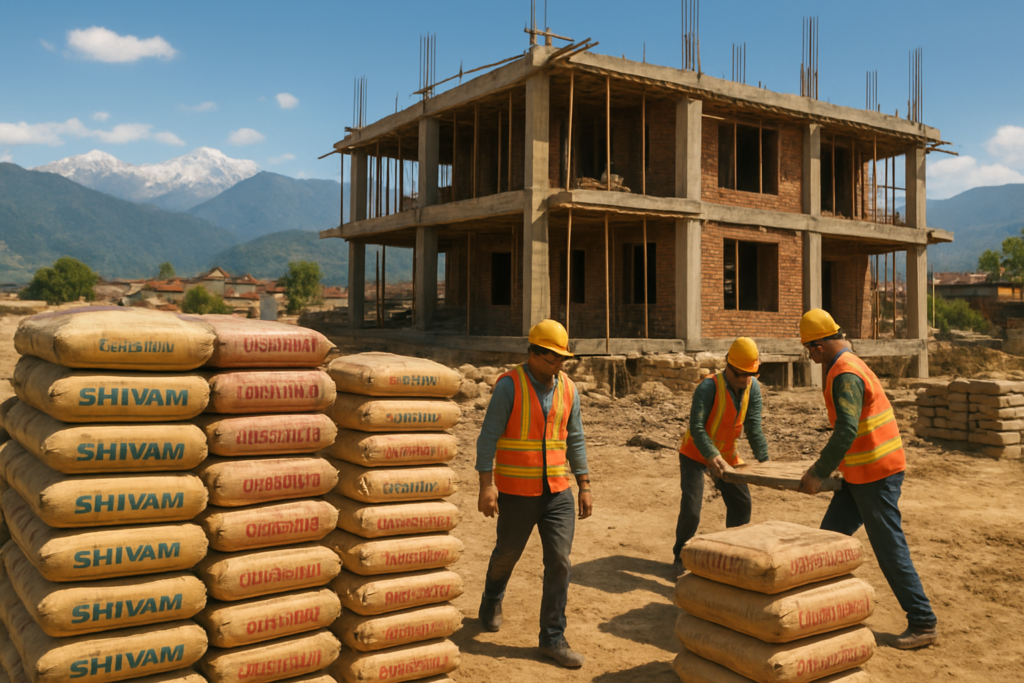
- Shivam Cement: approximately NPR 850 per bag
- Hongshi Cement: NPR 630 to NPR 810 per bag (model‑dependent)
- Sagarmatha Cement (Kathmandu Valley): NPR 800 per bag; other major cities – NPR 820; rural areas – NPR 860
Prices are approximate and subject to change. Always verify with local dealers — and don’t forget to ask about bulk discounts if you’re ordering for a whole house.
Portland Pozzolana Cement (PPC) Rates in 2025
PPC remains the workhorse for non‑structural elements. Current PPC cement price in Nepal 2025 indicators:
- Jagdamba Cement: around NPR 680 per bag
- Samrat Cement: NPR 550 to NPR 650 per bag
- Sagarmatha Cement (Kathmandu Valley): NPR 650 per bag; other cities – NPR 670; rural areas – NPR 700
If you see prices significantly lower than these bands, double‑check the manufacturing date and storage conditions. Cement loses strength over time, especially in Nepal’s humid climate, so never sacrifice quality for a few rupees.
Regional Price Variation: Why Rural Nepal Pays More
It’s a frequent frustration: the same bag of Sagarmatha OPC costs NPR 800 in Kathmandu but NPR 860 in a remote hill district. The price ladder reflects real logistics challenges — narrow roads, limited truck availability, and multiple handling points. For NRNs building in their ancestral village, this is a critical cost you must budget from the start. GharNaksa often recommends consolidating cement purchases during the dry season (October–March) when transport is easier and prices are more stable.
Pro tip: Ask your contractor to calculate the total number of bags needed based on the structural design. Then, compare quotes from at least three regional dealers. A small price difference per bag can save you NPR 30,000–50,000 on a 400‑bag order.
NRN Considerations: Remittance, Building Codes, and Monsoon Planning
Stretching Your Remittance
Fluctuating exchange rates are a fact of life for NRNs. When the US dollar, Australian dollar, or Euro strengthens, your NPR budget swells, and vice versa. Keep an eye on forex trends, and consider locking in a forward contract with your bank if you’re transferring a large sum. Also, many Nepali suppliers now accept direct international payments — ask your dealer or work with a construction manager who can handle procurement on your behalf.
Nepal Building Code (NBC 205) Compliance
All cement used in structural members must comply with the Nepal Building Code (NBC 205) and Bureau of Standards & Metrology requirements. Reputable brands like those listed above already meet these specs, but always demand test certificates. If you’re constructing a multi‑storey home, your engineer may specify higher grade concrete (M25 or above), which in turn demands OPC with a good strength track record.
Monsoon‑Ready Construction
The June–September monsoon brings heavy rain, high humidity, and road blockages. Stored cement is prone to lumping and strength loss. Plan your construction timeline so that major concrete pours (foundation, slab) happen before the rains. If work must continue, insist on waterproof covered storage and use cement within 30 days of delivery. A few extra tarpaulins now can save you thousands in wasted material.
How GharNaksa Simplifies Cement Procurement for NRN Clients
At GharNaksa, we don’t just design beautiful terraced houses — we also manage the entire material procurement process for NRN homeowners. Our team handles:
- Multi‑dealer price negotiations on your behalf
- Quality verification (freshness, weight, packaging)
- Logistics coordination, including monsoon‑proof storage
- Integration with our turnkey construction packages
We’ve helped over 150 NRN families build stress‑free. By bundling design, material sourcing, and construction supervision, we eliminate the guesswork that drives up cement costs.
Frequently Asked Questions About Cement Prices in Nepal
What is the current cement price in Nepal in 2025?
As of early 2025, a 50 kg bag of OPC costs between NPR 630 and NPR 850 depending on brand and location, while PPC ranges from NPR 550 to NPR 700. Premium brands like Shivam or Sagarmatha are at the higher end, while Samrat and some Hongshi variants occupy the lower bracket.
Why are cement prices different in rural and urban areas?
Transportation cost is the main driver. A bag that leaves the factory gate at the same price will accumulate freight charges, handling fees, and dealer margins as it travels from a Terai warehouse to a hill station. Poor road conditions, especially during monsoon, amplify this effect.
How can NRNs save money on cement without compromising quality?
Bulk purchasing (often 500+ bags), opting for a reliable PPC brand for non‑structural work, and timing your order during the dry season can cut costs. Working with a construction manager who negotiates directly with multiple dealers is another proven strategy — something GharNaksa offers all NRN clients.
Is OPC or PPC better for a residential house in Nepal?
It depends on the application. OPC is essential for load‑bearing elements like columns, beams, and slabs because it gains strength quickly. PPC is more durable and economical for plastering, brick masonry, and foundations in moist soil. A well‑designed home will use both — around 60% OPC and 40% PPC by volume.
Do cement prices include taxes and transportation?
Most listed prices are ex‑dealer yard, meaning you’ll need to add VAT (typically 13%) and local delivery charges. Always ask for a “delivered‑to‑site” quote so you can compare apples to apples. GharNaksa’s procurement team handles this negotiation transparently, with no hidden markups.
Plan Your Nepal Home with Confidence
Ultimately, a Rs. 20 difference per bag shouldn’t derail your dream. What matters is reliable supply, tested quality, and a construction partner who understands your NRN perspective. At GharNaksa, we blend local expertise with global communication — WhatsApp updates, notobird‑style video walkthroughs, and milestone‑based billing that aligns with your remittance schedule. Contact us today for a free consultation, and let’s turn your Kathmandu valley plot or Himalayan hill station into a home you’ll be proud of.