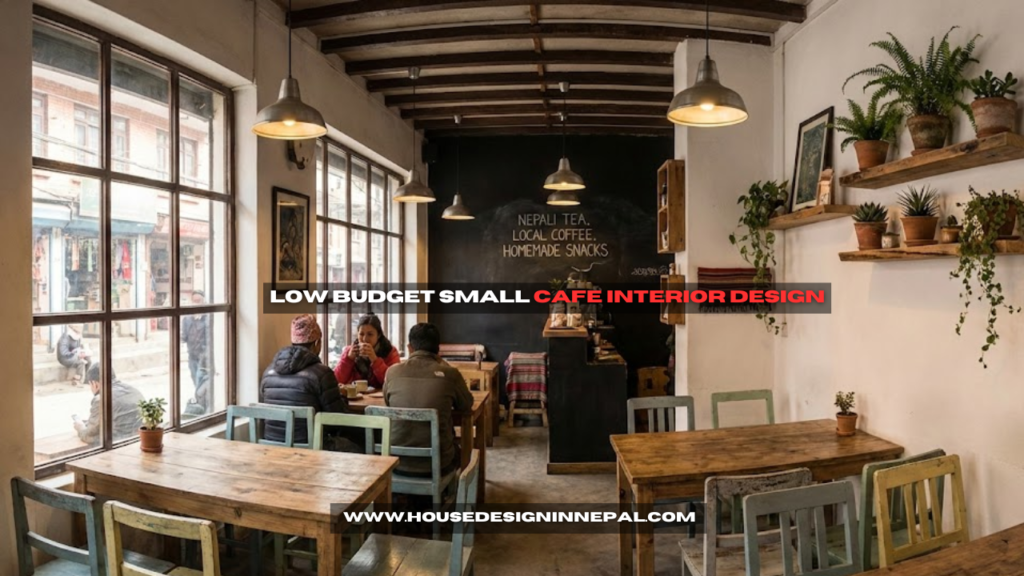
You’ve saved up for months. You finally have your café space—maybe it’s a cozy 150 square feet in Thamel, or a quiet corner in your neighborhood. You can already imagine the smell of fresh coffee, the hum of conversation, the warm lighting. But now you’re staring at bare walls, a concrete floor, and a budget that’s looking thinner by the day for Low Budget Small Cafe Interior Design.
Here’s the truth: you don’t need lakhs of rupees to create a café that people love. You need smart choices, a little creativity, and a design strategy that prioritizes what actually matters to your customers.
This guide will walk you through affordable, actionable interior design ideas specifically for small café owners in Nepal working with tight budgets. Whether you’re opening your first café or redesigning an existing space, you’ll find practical tips that won’t drain your savings.
Why Smart Interior Design Matters for Small Cafés (Low Budget Small Cafe Interior Design)
Let’s be honest—people don’t just come to your café for coffee. They come for the experience. And that experience starts the moment they walk through your door.
Good interior design does three critical things for your business. First, it creates a memorable first impression that turns one-time visitors into regulars. Second, it encourages customers to take photos and share on social media, giving you free marketing that money can’t buy. Third, it maximizes your limited space so you can serve more customers comfortably without feeling cramped.
Research shows that customers spend up to 20% more time in well-designed spaces, which translates directly to higher average bills. Color psychology influences mood and purchasing behavior—warm tones encourage longer stays, while bright colors create energy and quick turnover.
If you’re serious about creating a professional café interior, consider working with experts who understand both design and budget constraints. A professional café design consultation can help you avoid costly mistakes and make the most of every rupee spent.
Understanding Your Budget: How Much Does Small Cafe Interior Design Actually Cost?
Before buying a single chair, you need to understand where your money should go. Most café owners make the mistake of spending randomly without a clear allocation plan, then running out of budget halfway through.
Typical Cost Breakdown for Small Café Interiors in Nepal
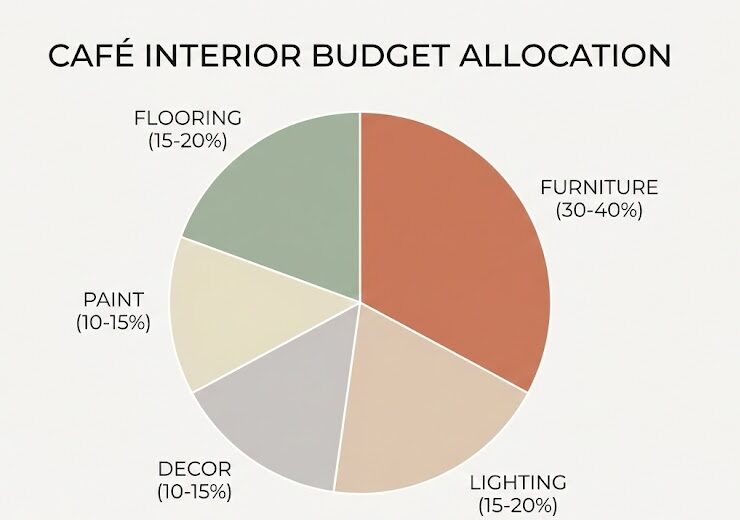
Here’s how successful café owners typically allocate their interior design budget:
Furniture accounts for 30 to 40 percent of your total budget—this includes tables, chairs, counter seating, and any storage pieces. Lighting takes another 15 to 20 percent, though this investment pays for itself in atmosphere and ambiance. Décor and accessories like plants, wall art, and small touches make up 10 to 15 percent. Paint and wall treatments usually cost 10 to 15 percent, while flooring, if you’re replacing or covering existing floors, can take 15 to 20 percent.
Setting Realistic Expectations for Different Budget Ranges
Let’s talk real numbers for Nepal:
Ultra-budget (NPR 50,000–150,000): This is a bootstrap café. You’ll be DIYing most things, buying second-hand furniture, using paint as your primary design tool, and getting creative with free materials like reclaimed wood. It’s absolutely doable, but requires more time and physical effort.
Mid-range budget (NPR 150,000–400,000): This is the sweet spot for most small café owners. You can buy some new furniture, invest in proper lighting, hire a painter, and still have room for décor and finishing touches. Most of the ideas in this guide target this budget range.
Comfortable budget (NPR 400,000+): You have flexibility to buy better quality furniture, invest in custom carpentry, upgrade flooring, and add special features like a statement wall or premium lighting fixtures.
Want to get more precise about your costs? Use this cost estimation calculator to break down your specific café renovation expenses category by category.
15 Low Budget Interior Design Ideas for Small Cafés
Now for the practical stuff—the actual design strategies that will transform your space without emptying your bank account.
1. Embrace Minimalist Design Principles
Minimalism isn’t just trendy—it’s budget-friendly. When you adopt a “less is more” philosophy, you automatically spend less on furniture, décor, and accessories.
The beauty of minimalist café design is that it makes small spaces feel bigger and more open. Clean lines, neutral color palettes, and uncluttered surfaces create a calming atmosphere that customers appreciate. Think light wood tones, white or beige walls, simple furniture shapes, and just a few carefully chosen decorative elements.
The Scandinavian café aesthetic is a perfect example. Light colors, natural materials, plenty of negative space, and strategic pops of green from plants create an inviting environment without overwhelming the senses.
2. DIY Accent Walls Using Paint or Reclaimed Wood
One feature wall can completely transform your café—and it doesn’t have to cost much. Paint is your most affordable option. A single gallon of quality interior paint costs around NPR 2,000 to 4,000 and can cover your entire accent wall. Choose a deep, rich color that contrasts with your other walls. Navy blue, forest green, terracotta, or charcoal grey all work beautifully.
If you want texture, consider reclaimed wood paneling. You can often find old wooden planks from demolished houses or construction sites for free or very cheap. Sand them down, apply a clear coat or stain, and mount them horizontally or vertically on your wall. The rustic look adds character and warmth.
Color psychology matters here. Warm colors like orange, red, and yellow stimulate appetite and conversation—perfect for quick-service cafés. Cool colors like blue and green create a calming effect that encourages customers to linger longer, increasing the likelihood they’ll order a second cup.
3. Mix Vintage and Modern Furniture
Here’s a secret that expensive cafés use: they intentionally mix furniture styles. This “curated” look actually costs less than buying everything matching and new.
Visit second-hand furniture markets in Kathmandu—places like Bhotahity, Kalimati, or smaller thrift stores around the valley. You’ll find solid wood chairs, vintage metal tables, and unique pieces with character that new furniture simply doesn’t have.
The key is refinishing these pieces so they look intentional, not random. Paint all your mismatched chairs the same color to unify them. Sand and restain wooden tables to a similar finish. Mix in one or two modern pieces to keep the look from feeling too vintage.
One café owner in Thamel furnished her entire 200 square foot space for under NPR 60,000 by buying second-hand furniture and spending a weekend painting everything matte black. The result looked like it came from an expensive interior designer.
4. Use Open Shelving Instead of Expensive Cabinetry
Custom cabinetry can eat up 30 to 40 percent of your budget quickly. Open shelving costs a fraction of that—sometimes 60 percent less—and actually looks more modern and inviting.
Install simple wooden or metal shelves along one wall to display coffee mugs, small plants, books, or retail products you’re selling. This serves three purposes: storage, display, and décor. Customers can see your offerings, the space feels more open, and you’ve added visual interest without buying expensive closed cabinets.
A few practical tips: Keep the lower shelves accessible for customers to view products. Use the higher shelves for storage or less frequently used items. Make sure everything on display looks intentional and organized—open shelving backfires if it looks cluttered or messy.
5. Maximize Natural Light (Free Lighting!)
This is the most underrated money-saver in café design. Natural light is free, makes your space feel larger, and creates a welcoming atmosphere that artificial lighting struggles to match.
If your café has windows, make the most of them. Avoid heavy curtains that block light. Instead, use sheer curtains or light-filtering blinds that provide privacy without darkness. Keep window areas clear of tall furniture or barriers.
Strategically placed mirrors can amplify whatever natural light you have. Position a large mirror on the wall opposite your window, and you’ve essentially doubled your natural light. Mirrors also make small spaces feel more expansive—a two-for-one design win.
If you’re still in the space-hunting phase, prioritize locations with good natural light. It will save you thousands in lighting costs and create a more pleasant environment for your customers.
6. Invest in Statement Lighting Fixtures
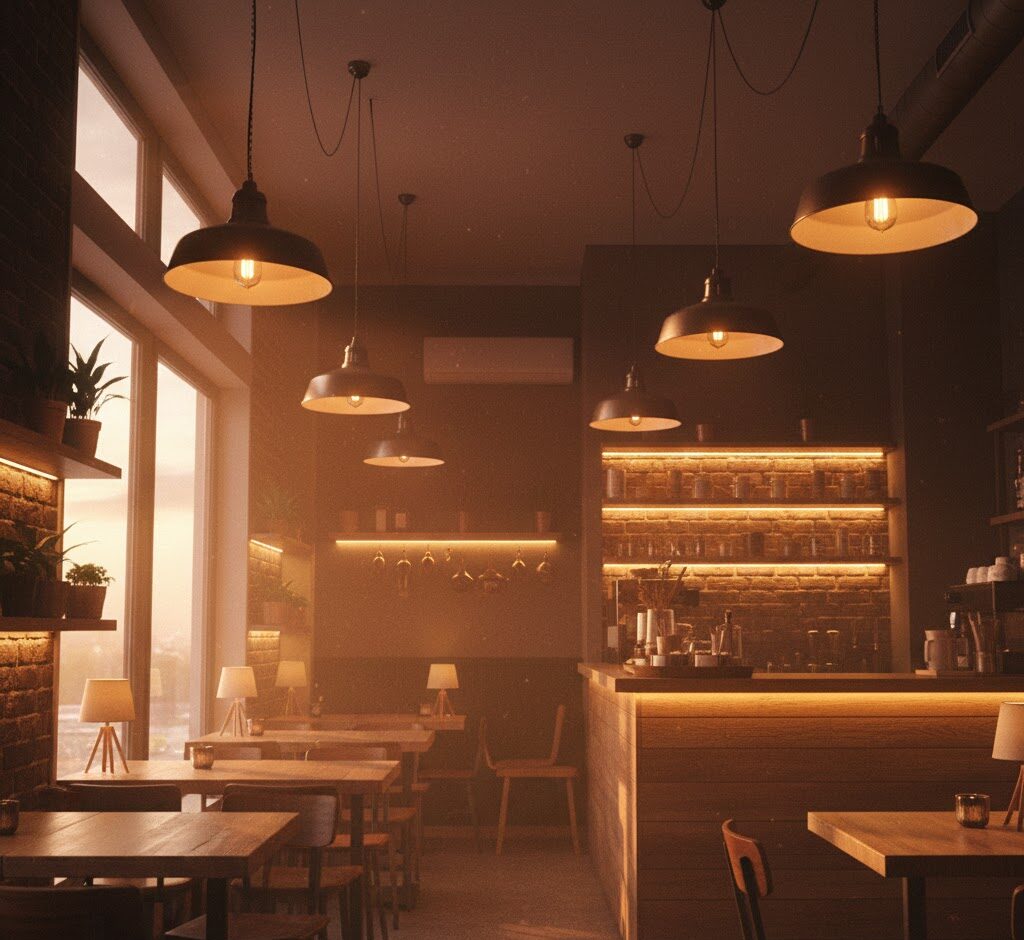
While natural light should be maximized, you’ll still need artificial lighting for early mornings, evenings, and cloudy days. This is where you should consider spending a bit more money—but strategically.
Instead of multiple expensive light fixtures, choose one or two statement pendant lights that become focal points in your space. You can find affordable industrial-style pendant lights at stores around Kathmandu for NPR 2,000 to 5,000 each. Hang them at different heights above your counter or seating area for visual interest.
LED bulbs cost more upfront but save you money long-term through lower electricity bills and longer lifespan. Warm white LEDs (2700K-3000K color temperature) create the cozy, inviting glow that cafés need.
For more help planning your lighting layout and calculating the right fixtures for your space, try our design planning tools that help you visualize different lighting scenarios before spending money.
Architectural Digest’s small café lighting guides offer excellent inspiration for creating layered lighting on a budget, showing how professionals combine ambient, task, and accent lighting effectively.
7. Create a Feature Wall with Affordable Materials
Beyond paint and wood, you have other budget-friendly options for creating a memorable feature wall.
Chalkboard paint costs around NPR 1,500 per liter and turns any wall into an interactive menu board or space for customer messages. It’s functional and adds a casual, approachable vibe that works well for coffee shops.
Peel-and-stick wallpaper has become much more affordable and accessible in Nepal. You can find options on Daraz or through import shops for NPR 3,000 to 8,000 per roll. Unlike traditional wallpaper, you can remove it easily if you’re renting or want to change designs later.
Consider partnering with local artists who need exposure. Offer your wall as a rotating gallery space where artists can display their work for a month or two. You get free, changing artwork, and they get visibility. Everyone wins.
8. Use Plants as Living Décor
Plants are possibly the best value-for-money décor investment you can make. A single plant costs NPR 200 to 500 but adds life, color, and air-purifying benefits to your space.
For cafés, choose low-maintenance indoor plants that thrive in indirect light. Snake plants, pothos, spider plants, and peace lilies are nearly impossible to kill and look beautiful. Hanging planters save valuable floor and table space while adding visual interest at eye level.
Group plants in odd numbers (three or five) for a more natural, designed look. Mix different heights and leaf shapes for variety. Place larger floor plants in corners to soften harsh angles, and small potted plants on shelves or window sills.
Beyond aesthetics, plants improve air quality by filtering out toxins and increasing oxygen levels. Customers subconsciously feel better in spaces with greenery—it’s backed by environmental psychology research.
9. Repurpose Industrial Materials
The industrial café aesthetic is popular because it looks expensive but can actually be done very cheaply using raw materials.
Metal pipes from hardware stores can become shelving brackets, table legs, or towel racks for NPR 500 to 1,000 per meter. Wooden shipping pallets can be transformed into furniture—coffee tables, seating benches, or even wall panels. Many businesses give these away for free since they’re discarding them anyway.
Edison bulbs or exposed filament bulbs create that vintage industrial vibe for NPR 300 to 600 per bulb. They look expensive but cost the same as regular bulbs. Just make sure you’re buying LED versions, not incandescent, to keep electricity costs down.
Concrete can be left exposed rather than covered. If you’re working with a raw space, consider leaving some concrete surfaces visible and sealing them with a clear coat. It’s actually cheaper than covering them, and it gives you that modern industrial edge.
10. Choose Multi-Functional Furniture
When space and budget are both limited, every piece of furniture needs to work harder. Multi-functional furniture gives you more utility for the same or less money.
Foldable tables and chairs let you reconfigure your space for different times of day or special events. During quiet hours, you can create more open space. During rush times, unfold everything to maximize seating. Decent quality folding furniture costs around NPR 3,000 to 6,000 per piece.
Storage benches solve two problems at once. Customers get comfortable seating, and you get hidden storage for supplies, extra napkins, or cleaning products. You can build simple storage benches yourself with basic carpentry skills or hire a local carpenter for NPR 5,000 to 10,000.
Nesting tables—small tables that stack inside each other—give you flexibility. Use them when needed, store them when you don’t. They’re perfect for small cafés that need to adapt to different customer volumes.
11. Paint Everything (Seriously)
Never underestimate the transformative power of paint. It’s the single most cost-effective way to make old or cheap furniture look cohesive and intentional.
Buy mismatched second-hand chairs for NPR 500 to 1,000 each, then paint them all the same color. Suddenly, they look like a designer set. Old wooden tables can be sanded down and painted or stained to match your aesthetic.
For café environments, choose paint types that can handle wear and cleaning. Semi-gloss or satin finishes work well for furniture and high-traffic walls because they’re more durable and easier to wipe down than matte paint.
Color schemes matter for small spaces. Light colors—white, cream, light grey, soft pastels—make spaces feel larger and brighter. If you want dark, moody colors, use them on just one accent wall and keep everything else light to maintain an open feeling.
12. Install Floating Shelves for Vertical Storage
Small cafés need to think vertically. When floor space is limited, walls become your most valuable real estate.
Floating shelves cost around NPR 1,500 to 3,000 each depending on size and material. They provide storage and display space without the bulk of traditional cabinets or bookcases. You can install them yourself with basic tools—a drill, level, and wall anchors.
Use them to display retail products like coffee beans, mugs, or branded merchandise. This creates a subtle sales opportunity while also serving as décor. Alternate products with decorative items like small plants, books, or candles to keep the look balanced.
For renters worried about drilling holes, there are damage-free mounting systems available, though they typically support less weight. If you’re renting, talk to your landlord—most are fine with a few small holes that can be easily patched when you leave.
13. Create Cozy Corners with Textiles
Textiles add warmth, comfort, and visual softness to your café without requiring major renovation or investment.
Affordable cushions and throw pillows (NPR 500 to 1,500 each) make hard wooden chairs more comfortable and add pops of color or pattern. Buy removable covers that can be washed regularly—this is important in a food service environment.
Curtain dividers can create intimate seating areas or separate different zones in your café without building walls. A floor-to-ceiling curtain costs much less than a partition wall and can be removed or changed easily.
Texture is more important than expensive materials. A rough jute rug, soft cotton throws, and linen cushions create a layered, designed look even when each item is inexpensive. Mix and match textures rather than spending money on premium fabrics.
14. Use Mirrors to Expand Visual Space
Mirrors are magic for small spaces. A well-placed mirror can make a 150 square foot café feel like 250 square feet by reflecting light and creating depth.
You can find large mirrors in Kathmandu for NPR 3,000 to 8,000 depending on size and frame quality. Position them strategically: across from windows to reflect natural light, at the end of narrow spaces to create the illusion of length, or behind seating areas to add depth.
The key is strategic placement, not quantity. Too many mirrors make a space feel disorienting or like a funhouse. Usually, one or two large mirrors are more effective than many small ones.
Choose simple frames that match your overall aesthetic. For industrial looks, go frameless or with simple metal frames. For warmer, traditional cafés, wooden frames work better.
15. Design Your Own Signage and Wall Art
Custom signage and artwork can cost thousands if you hire professionals. But with free design tools, you can create professional-looking graphics yourself.
Canva is free and has hundreds of templates specifically for coffee shops and cafés. You can design your logo, menu boards, wall quotes, or promotional posters in minutes even without design experience. GIMP is another free tool for more advanced graphic work.
Once designed, print your artwork at local print shops for NPR 500 to 2,000 depending on size and quality. Frame prints yourself using simple, affordable frames from department stores. A cohesive set of three framed prints costs less than NPR 5,000 total but looks intentional and professional.
Typography trends for café branding currently favor clean, modern sans-serif fonts for contemporary spaces, and hand-lettered or script fonts for vintage or cozy aesthetics. Keep it readable—your customers should be able to read your menu from a few feet away.
For inspiration on how professionals design small café spaces on budgets, browse Behance’s café interior design projects. You’ll see real examples of budget-conscious designs that still look stunning.
Small Café Layout Planning for Limited Budgets
Design isn’t just about what things look like—it’s about how your space functions. Poor layout planning wastes your limited square footage and creates bottlenecks that frustrate customers.
Floor Plan Strategies That Maximize Space
The most important principle in café layout is flow. Customers should be able to enter, order at the counter, wait for their order, and find seating without awkward navigation or crowding.
Counter placement is psychological. Most successful cafés place the ordering counter where customers can see it immediately upon entering but not so close to the door that it creates a barrier. The classic position is slightly to the left or right of the entrance, allowing customers to naturally move toward it.
For very small spaces—100 to 300 square feet—consider these arrangements. A single-wall layout puts your counter against one long wall and seating along the opposite wall or in the center. An L-shaped layout uses two adjacent walls for counter and service, leaving the remaining space for seating. A corner layout maximizes every inch by utilizing corner spaces efficiently.
Before buying any furniture, measure your space precisely and create a floor plan. Mark out where the counter will go, where customers will queue, where they’ll wait for orders, and how they’ll access seating. Walk through this flow yourself several times to identify any problems.
Seating Capacity vs. Comfort: Finding the Balance
Industry standard suggests 10 to 15 square feet per seat for comfortable café seating. This includes the chair, table space, and room to move around.
Calculate honestly: if you have 200 square feet total and need 50 square feet for your counter, service area, and walking space, you have 150 square feet for seating. That realistically fits 10 to 15 customers comfortably—not 25.
The temptation with small spaces is to cram in as many seats as possible, but overcrowded cafés create negative experiences. Customers feel uncomfortable, tables get bumped constantly, and the noise level becomes overwhelming. You’ll make more money in the long run with fewer, more comfortable seats that encourage longer stays and repeat visits.
Consider bar seating along windows or walls. Bar-height tables and stools take up less floor space than traditional tables and chairs. They’re also cheaper—you can buy simple metal stools for NPR 2,000 to 3,000 each.
If you’re considering investing in your café space and want to understand the full financial commitment, this café investment affordability calculator helps you see whether your budget can comfortably support your plans.
Homelane offers detailed space planning guides that show exactly how to configure different sized café spaces for maximum efficiency and customer comfort.
Affordable Lighting Ideas for Small Cafés
Lighting makes or breaks the atmosphere in your café. Too bright feels harsh and unwelcoming. Too dim makes reading menus difficult and creates a gloomy mood.
Layered Lighting on a Budget
Professional designers use three types of lighting, and you should too—even on a tight budget.
Ambient lighting provides overall illumination for your space. This is your main source of light. For small cafés, this might be a combination of recessed ceiling lights or a few well-placed overhead fixtures. You need enough ambient light so customers can see clearly but not so much that it feels sterile.
Task lighting illuminates specific work areas. In cafés, this means lighting your counter area where baristas work and customers order. Under-cabinet LED strips cost NPR 1,500 to 3,000 and provide excellent task lighting for your work surfaces.
Accent lighting highlights specific features—artwork, plants, or architectural details. This is optional on very tight budgets but makes a huge difference in atmosphere. Small, inexpensive spotlights or picture lights cost NPR 800 to 2,000 each.
The magic happens when you layer all three types, even modestly. It creates depth, visual interest, and a professional feel that single-source lighting never achieves.
Where to Buy Cheap but Stylish Lighting in Nepal
Local lighting stores in Kathmandu’s New Road, Putalisadak, and Naxal areas offer decent selections at competitive prices. You can negotiate, especially if buying multiple fixtures.
Online options include Daraz and SastoDeal for affordable lighting, though shipping costs and potential quality issues are considerations. For truly budget options, consider AliExpress or similar platforms if you can wait 2-4 weeks for delivery—prices are often 30-50 percent lower than local options.
Prioritize LED fixtures exclusively. Initial costs are slightly higher, but the electricity savings over just six months make up the difference. Plus, LEDs last years longer than traditional bulbs, saving you replacement costs and maintenance time.
Livspace provides excellent lighting tips specifically for small commercial spaces, showing practical ways to achieve professional lighting results on modest budgets.
Low Budget Café Furniture Ideas That Look High-End
Furniture is your biggest single expense, so getting this right matters enormously. The good news: with smart shopping and some elbow grease, budget furniture can look expensive.
Sourcing Affordable Furniture Locally
Second-hand markets are gold mines for café owners. In Kathmandu, check Bhotahity for vintage and used furniture, Kalimati for wholesale options, and smaller thrift stores scattered around the valley. Visit multiple times—inventory changes weekly.
Look for solid wood pieces even if they’re scratched or outdated. Solid wood can be refinished and will last years. Avoid cheap particle board furniture even if it looks good initially—it falls apart quickly and can’t be refinished when damaged.
Wholesale furniture suppliers in areas like Balaju or near Kalanki offer better prices than retail stores, especially if you’re buying multiple pieces. Don’t be afraid to negotiate, particularly on bulk purchases.
Custom carpenter work costs more upfront but sometimes offers better value than ready-made furniture. A local carpenter can build simple tables for NPR 5,000 to 8,000 each that are sturdier and sized exactly for your space. Compare prices before deciding.
Refinishing and Upcycling Old Furniture
This is where you can save the most money while creating a unique look. Refinishing furniture requires time and some physical effort, but minimal skill and tools.
For basic refinishing you need sandpaper (various grits), stain or paint, clear protective coat (polyurethane or lacquer), basic painting supplies (brushes or rollers), and clean rags. Total cost for all supplies: around NPR 3,000 to 5,000.
The process is straightforward. Sand the furniture to remove old finish and create a smooth surface. Clean thoroughly to remove all dust. Apply stain or paint in thin, even coats, allowing proper drying time between coats. Finish with a clear protective coat for durability.
Reupholstering chairs is more complex but still doable. You can find affordable fabric at local markets for NPR 300 to 800 per meter. Watch online tutorials—the basic process involves removing old fabric, cutting new fabric to size, and stapling it securely to the frame. For your first attempt, start with simple chair seats rather than complex upholstered furniture.
When deciding whether to DIY or hire help, consider: refinishing (usually DIY-friendly), reupholstering simple seats (DIY-friendly), reupholstering complex pieces like sofas (hire a professional for NPR 3,000 to 8,000), and structural repairs or carpentry (hire a professional unless you have experience).
Budget-Friendly Furniture Styles That Age Well
Some furniture styles stay looking good even as they age and wear, while others quickly look shabby. Choose wisely.
Industrial metal frames with wood tops are incredibly durable and the worn look actually adds character over time. A few scratches or dings on metal table legs don’t look bad—they look lived-in.
Solid wood furniture, especially in darker stains like walnut or teak, ages beautifully. Minor scratches blend in with the wood grain. You can easily touch up or restain wood furniture every few years to keep it looking fresh.
Avoid cheap particle board or veneer furniture. Once the thin surface layer chips or peels, there’s no fixing it, and it looks obviously cheap and neglected. If your budget only allows particle board, choose painted pieces rather than fake wood-grain patterns—at least you can repaint when needed.
Common Mistakes to Avoid When Designing a Small Café on a Tight Budget
Learning from others’ mistakes is cheaper than making them yourself. Here are the most common design errors small café owners make.
Overcrowding the space. The number one mistake is trying to fit too many seats. Yes, you want to serve more customers, but cramped quarters drive people away. Follow the 10-15 square feet per seat guideline religiously.
Ignoring lighting. Some owners focus entirely on furniture and décor, treating lighting as an afterthought. Then they open and realize their café feels dim and unwelcoming. Budget at least 15 percent of your total for lighting—it’s that important.
Choosing style over function. Those beautiful backless metal stools might look modern, but if customers find them uncomfortable after 15 minutes, they’ll leave sooner and spend less. Prioritize comfortable seating that encourages people to stay longer.
Forgetting about electrical outlets. In 2025, customers expect to charge their phones and laptops. Plan for accessible outlets near seating areas. Adding them after opening requires expensive electrical work. Include them in your initial plan.
Neglecting acoustics. Hard surfaces—concrete, tile, metal, wood—create echoing spaces that get loud and uncomfortable when even moderately busy. Add some soft elements: cushions, curtains, acoustic panels, or sound-absorbing ceiling tiles. Your customers will thank you.
Poor ventilation. If kitchen smells overwhelm your seating area, it creates an unpleasant environment. Plan proper ventilation between your coffee preparation area and customer seating. This might require professional HVAC consultation but it’s worth it.
How to Design a Small Café on Low Budget: Step-by-Step Action Plan
Here’s your practical, actionable roadmap from empty space to opened café.
Step 1: Measure Your Space & Create a Floor Plan
Before buying anything, measure your space precisely. Note the locations of doors, windows, electrical outlets, and any permanent fixtures. Create a scaled floor plan on paper or use our digital design tools to visualize different layouts.
Step 2: Set Your Total Budget & Allocate by Category
Write down your total available budget. Then allocate it: 30-40% furniture, 15-20% lighting, 10-15% décor and accessories, 10-15% paint and walls, 15-20% flooring (if needed), 5-10% contingency for unexpected costs.
This allocation keeps you from overspending in one area and running out of money before finishing.
Step 3: Prioritize Must-Haves vs. Nice-to-Haves
Make two lists. Must-haves include functional seating for your target capacity, adequate lighting, counter and service area, basic décor to avoid looking unfinished, and any health or safety requirements.
Nice-to-haves include statement lighting fixtures, extensive plant collection, custom artwork, high-end finishes, and premium furniture upgrades.
Buy must-haves first. Only spend on nice-to-haves if budget remains after covering essentials. You can always upgrade later after opening and generating revenue.
Step 4: Source Materials Locally First, Import Second
Always check local options first. You’ll save on shipping, can inspect quality in person, get items immediately, and often can negotiate better prices face-to-face.
Import only items that are significantly cheaper online even after shipping, aren’t available locally, or offer much better quality that justifies the wait and risk.
Step 5: DIY What You Can, Outsource What You Can’t
Be honest about your skills and available time. You can probably DIY painting furniture, installing floating shelves, basic painting, arranging furniture and décor, and creating signage and artwork.
Hire professionals for electrical work (required by law and for safety), plumbing if needed, structural carpentry, complex reupholstery, and anything involving permits or inspections.
Step 6: Stage Your Space Before Opening (Test Layouts)
Once furniture is in place, spend time in your space before opening. Sit in different seats. Walk the customer flow from entrance to counter to seating. Identify any awkward spots or bottlenecks. Adjust before your first customer arrives—it’s much easier than rearranging while operating.
Step 7: Get Feedback from Friends Before Launch
Invite a few trusted friends who will give honest feedback. Ask them to go through the entire customer experience: entering, ordering (even if you’re not serving yet), finding a seat, sitting for a while. Listen to their observations about comfort, flow, lighting, and overall feel.
Real-Life Examples: Beautiful Small Cafés Designed on Minimal Budgets
Real success stories prove that budget limitations don’t mean compromising on quality or appeal.
Case Study 1: The 150 Square Foot Café in Thamel
Total budget: NPR 80,000. A young entrepreneur opened a tiny coffee corner in a high-foot-traffic area near Thamel. Here’s how she allocated her budget:
Furniture (NPR 30,000): Four second-hand wooden tables purchased for NPR 2,000 each and refinished with dark stain, eight mismatched chairs bought for NPR 800 each and painted uniform grey, one custom counter built by a local carpenter for NPR 12,000.
Lighting (NPR 15,000): Three industrial pendant lights, one LED strip for counter task lighting, and warm white LED bulbs throughout.
Walls and paint (NPR 10,000): One accent wall painted deep navy, remaining walls in off-white, DIY chalkboard paint for menu board.
Décor (NPR 12,000): Ten potted plants at various sizes, three framed prints designed in Canva and printed locally, open shelving made from reclaimed wood.
Flooring (NPR 8,000): The existing floor was concrete but in decent condition. She sealed and polished it for an industrial look rather than covering it.
Contingency (NPR 5,000): Saved for unexpected issues, ended up using it for additional electrical outlet installation.
The café became Instagram-famous within three months due to its aesthetic appeal and intimate atmosphere. Smart design choices created a space that felt much more expensive than its actual cost.
Case Study 2: Suburban Coffee Corner (NPR 120,000 budget)
A residential area café focused on being a comfortable neighborhood gathering spot. The 200 square foot space prioritized comfort over trendy aesthetics.
Key strategies: Invested more in seating comfort with cushioned chairs and padded benches. Used warm color palette (cream walls, terracotta accents) to create welcoming feel. Maximized natural light from large windows with minimal window treatments. Created cozy corner with bookshelf and comfortable chairs for customers who wanted to read. Built community board for local announcements and events.
This café prioritized function over form while still maintaining an attractive space. After one year, it had become the neighborhood’s living room—exactly what the owner intended.
Key Takeaways from Both Examples
First, clear vision matters more than big budgets. Both owners knew exactly what atmosphere they wanted to create and made every decision support that vision. Second, smart shopping and DIY work can cut costs by 50 percent or more without sacrificing quality. Third, personality beats perfection. Customers appreciate authentic spaces with character over sterile, overly designed environments. Finally, focusing budget on what customers actually experience—comfortable seating, good lighting, pleasant atmosphere—delivers better returns than expensive finishes they barely notice.
Final Thoughts: Your Dream Café Interior Is More Affordable Than You Think
If you’ve made it this far, you now have a complete blueprint for creating a café interior that looks professional and inviting without draining your savings.
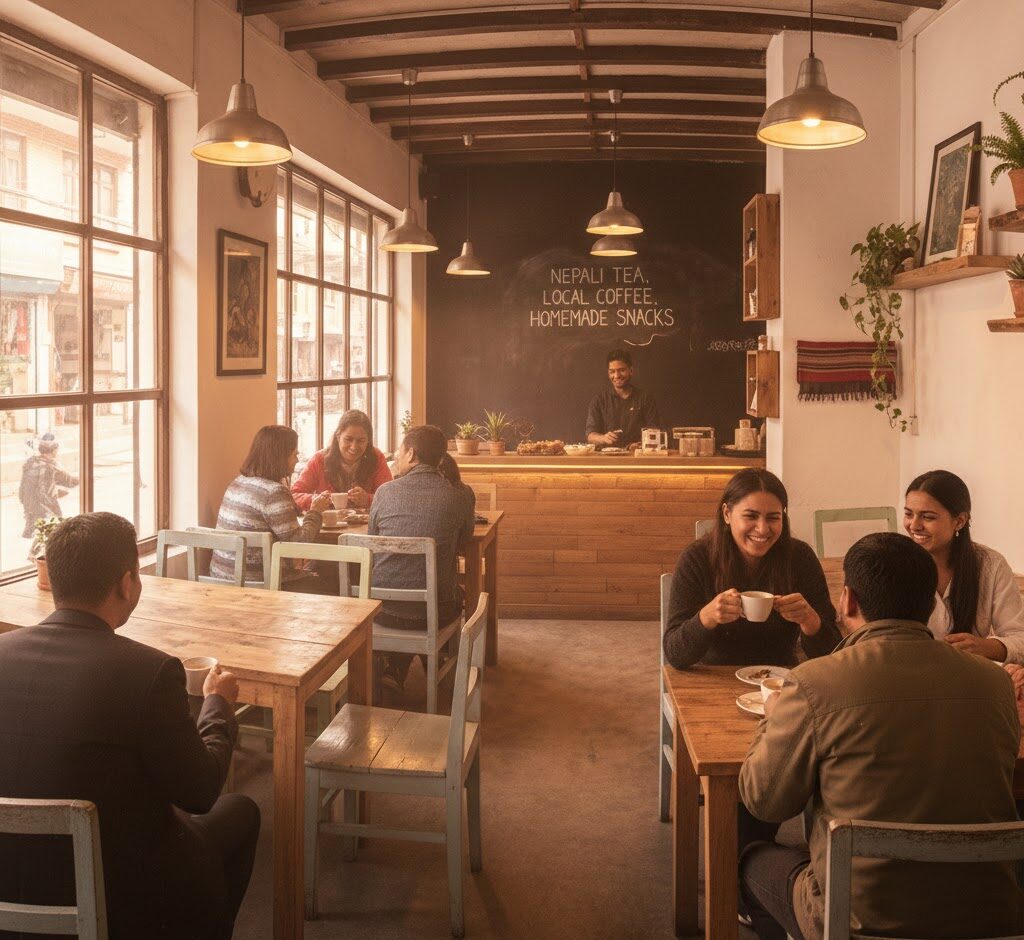
The core principles are straightforward: prioritize what matters most to the customer experience, get creative with affordable materials and second-hand finds, DIY whatever you reasonably can while hiring professionals for specialized work, think long-term by choosing durable materials that age well, and start with essentials then upgrade gradually as revenue grows.
Budget constraints don’t limit creativity—they force it. Some of the most memorable, beloved cafés started with tiny budgets and owners who thought creatively about every design choice. Your financial limitations might actually become your greatest asset, pushing you to create something unique rather than following expensive trends.
Remember that you don’t need to do everything at once. Open with the essentials, build your customer base, generate revenue, then reinvest in gradual improvements. Many successful cafés started with minimal interiors and evolved over months and years as their business grew.
The café business is ultimately about community, connection, and good coffee. Your interior design should support those goals, not overshadow them. Create a space where people feel comfortable, welcome, and eager to return. That’s worth more than any expensive furniture or trendy design element.
For additional inspiration and expert guidance on café interiors, visit InteriorDesignerNP for Nepal-specific design resources and professional consultation services.
Ready to Transform Your Café Space?
You’ve got the knowledge. Now it’s time to take action.
Start planning your café’s interior makeover with expert support. Our team at AS Designs Studios specializes in helping café owners like you create beautiful, functional spaces that fit real-world budgets. Get a free design consultation and discover exactly how affordable your dream interior can be.
Want to see precise numbers for your specific project? Use our cost estimation calculator to plan your café budget with confidence. Break down costs by category, adjust your priorities, and see exactly where your money should go.
Need daily inspiration and practical tips? Follow us for real café designs, budget hacks, and Nepal-specific interior design advice:
- Instagram: @asdesignsstudios — Daily design inspiration and before/after transformations
- Facebook: AS Designs Studios — Community discussions and café design tips
- YouTube: Aenish Shrestha — Video tutorials and design walkthroughs
Your café’s story starts with great design. Let’s make it happen—together.