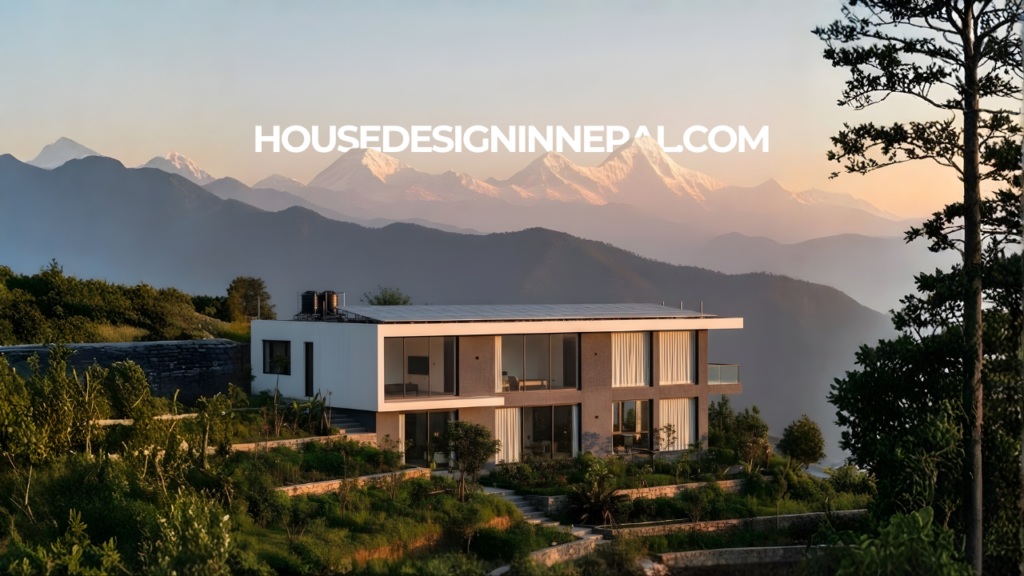
Building a home in Nepal is more than just construction—it’s about creating a safe, functional, and beautiful space that stands the test of time. Whether you’re planning a modern villa in Kathmandu or a traditional home in Pokhara, the right Nepal house design can make all the difference.
Nepal’s unique geography, climate, and seismic activity demand thoughtful planning. A well-designed home not only looks good but also ensures structural safety, maximizes space, and keeps costs under control. From floor plans to 3D visualizations, professional Nepal house design services help homeowners avoid costly mistakes and build with confidence.
In this guide, we’ll walk you through everything you need to know about Nepal house design—types, processes, costs, and how to choose the right design partner for your dream home.
What is Nepal House Design?
Nepal house design refers to the planning and creation of residential structures tailored to the country’s specific environmental, cultural, and regulatory needs. Unlike generic blueprints, professional house design in Nepal takes into account earthquake resistance, climate conditions, local materials, and traditional aesthetics.
A good Nepal house design improves space utilization, reduces long-term maintenance, and ensures compliance with the National Building Code. It also reflects your lifestyle—whether you prefer a minimalist modern layout or a culturally rich traditional home.
Key factors that influence Nepal house design include:
- Seismic safety: Nepal lies in a high-risk earthquake zone, making structural integrity a top priority.
- Climate adaptation: Nepal house design must account for monsoon rains, heat, and cold depending on the region.
- Space efficiency: Urban areas often have limited land, requiring smart layouts.
- Cultural values: Many families prefer designs that incorporate traditional Nepali elements.
Professional designers combine these factors to create homes that are safe, sustainable, and suited to your needs.
Types of House Designs in Nepal
Nepal house design comes in various styles, each catering to different budgets, preferences, and locations. Understanding the different types of Nepal house design helps you choose what works best for your needs. Here are the most popular types:
Modern House Design in Nepal
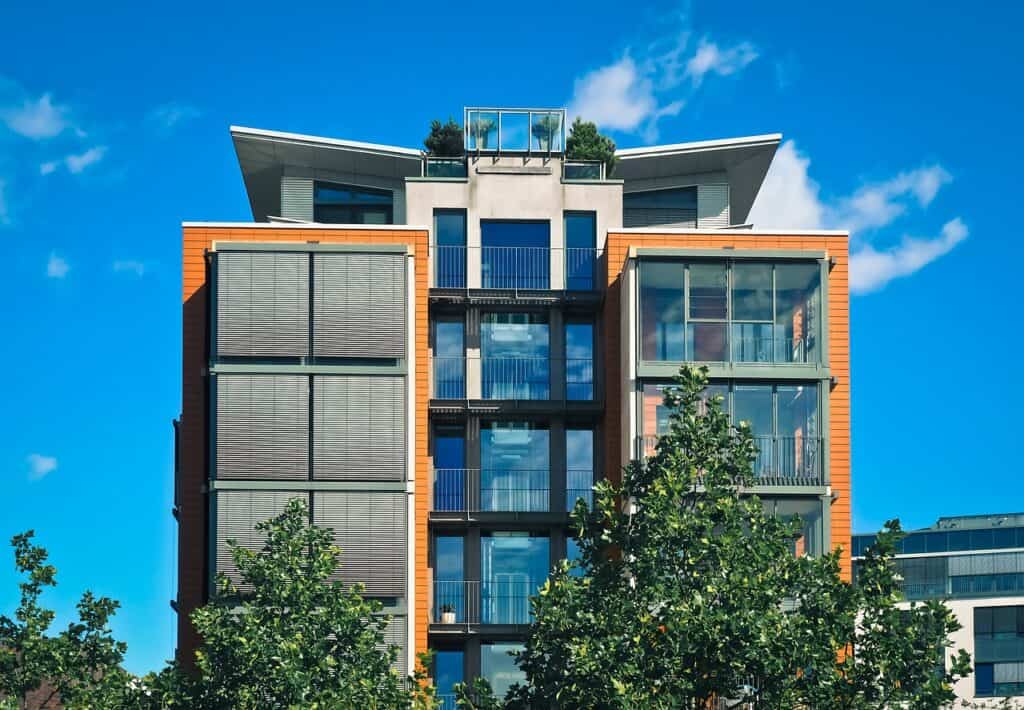
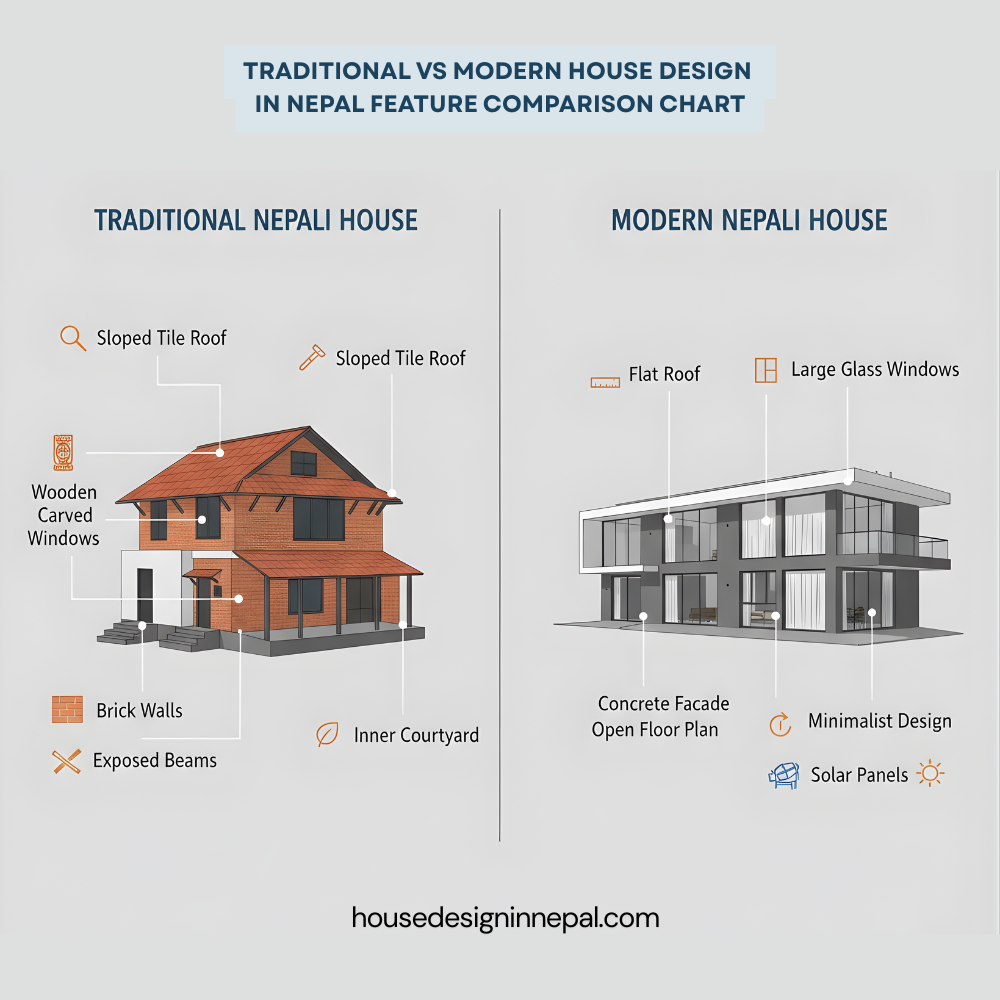
Modern house design in Nepal is characterized by clean lines, open floor plans, large windows, and minimalist aesthetics. These homes prioritize functionality, natural light, and energy efficiency.
Popular features include:
- Open-concept living and dining areas
- Floor-to-ceiling windows for ventilation
- Flat or sloped roofs with contemporary finishes
- Use of concrete, glass, and steel
Modern designs are especially popular in urban areas like Kathmandu, Lalitpur, and Bhaktapur, where young professionals and nuclear families seek stylish, low-maintenance homes.
Traditional Nepali House Design
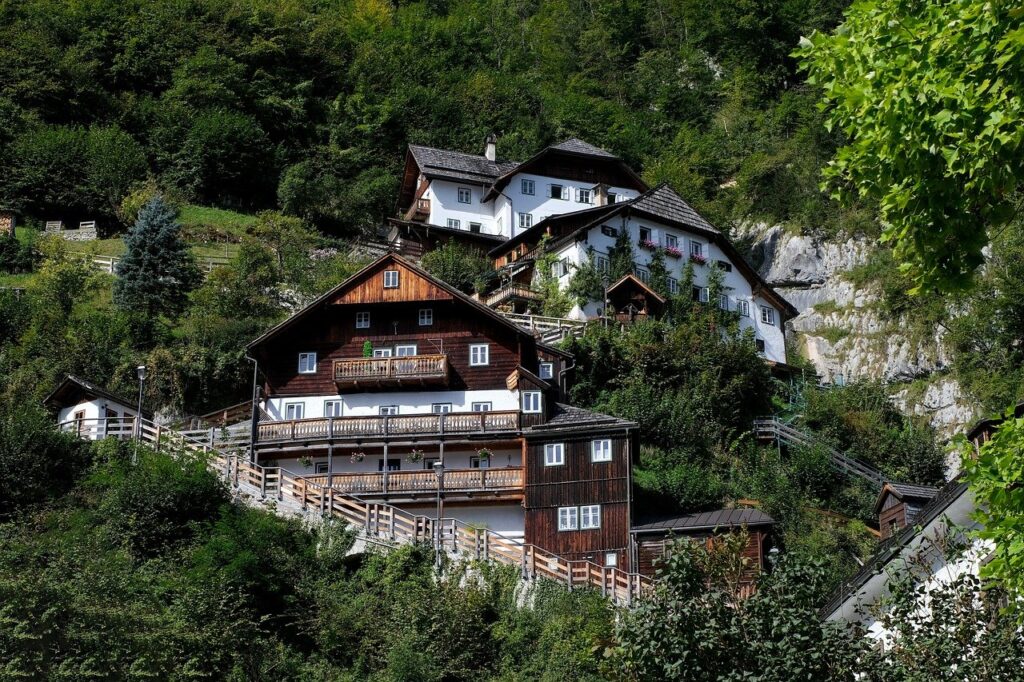
Traditional house design in Nepal draws inspiration from centuries-old architecture. Traditional Nepal house design showcases the country’s rich cultural heritage and craftsmanship. These homes often feature:
- Courtyards for natural ventilation and family gatherings
- Sloped tile roofs to manage monsoon rains
- Exposed brick and wooden beams
- Intricate woodwork on doors and windows
Traditional designs are common in rural areas and among families who value cultural heritage. They blend beautifully with Nepal’s natural landscapes and reflect the country’s rich architectural history.
Small House Design in Nepal
Land scarcity and budget constraints make small house design in Nepal a practical choice for many homeowners. Compact Nepal house design focuses on maximizing every square foot through:
- Multi-functional spaces (e.g., living room doubles as dining area)
- Built-in storage solutions
- Vertical expansion (adding floors instead of spreading outward)
- Smart furniture and layout planning
Small homes are ideal for young couples, retirees, or anyone building on a tight budget or limited land.
Duplex and Villa Designs
For larger families or those seeking luxury, duplex and villa designs offer spacious, multi-story living. These homes often include:
- Separate living zones for privacy
- Multiple bedrooms and bathrooms
- Modern amenities like home theaters, gyms, or rooftop terraces
- High-end finishes and custom interiors
Duplexes and villas are common in suburban and planned residential areas where land is more affordable.
3D House Design Nepal
3D house design has revolutionized the way homeowners visualize their future homes. Modern Nepal house design services now include advanced 3D visualization that shows exactly how your home will look—inside and out—before construction begins.
Benefits of 3D design include:
- Clear visualization of layouts, colors, and materials
- Easier decision-making for clients
- Fewer changes during construction
- Better communication between designers, engineers, and contractors
If you’re planning a new home, exploring 3D design tools can help you make confident, informed choices.
The House Design Process in Nepal
Building a home starts with a solid design process. Professional Nepal house design follows a systematic approach to ensure quality and safety. Here’s how professional design studios typically work:
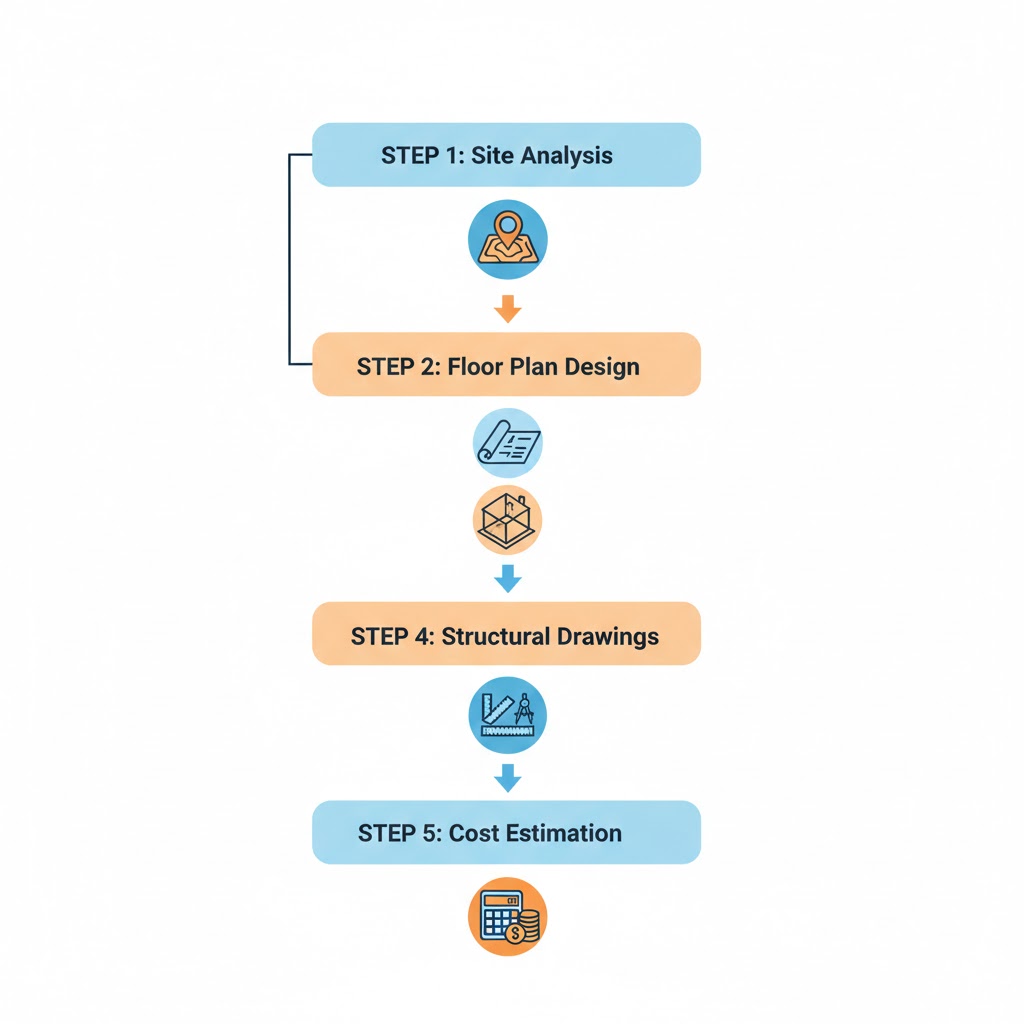
Step 1 – Site Analysis
Before any sketches are made, designers visit your land to assess:
- Topography and slope
- Soil quality and foundation requirements
- Sun orientation and wind direction
- Access to roads, utilities, and drainage
- Local building regulations and setback rules
Site analysis ensures your design works with the land, not against it.
Step 2 – Floor Plan Design
The floor plan is the heart of your home. It defines how rooms are arranged, how spaces flow, and how your family will live day-to-day.
Designers consider:
- Number of bedrooms, bathrooms, and common areas
- Privacy between zones (e.g., bedrooms vs. living areas)
- Future expansion or resale value
- Cultural preferences (e.g., separate kitchen, prayer room)
A well-thought-out floor plan improves comfort, functionality, and long-term satisfaction.
Step 3 – 3D Elevation Design
Once the floor plan is finalized, designers create 3D elevations—realistic exterior views of your home. This step allows you to see the facade, roofline, windows, and overall aesthetic before construction starts.
3D visualization makes it easy to experiment with colors, materials, and architectural styles.
Step 4 – Structural Drawings
Structural drawings are the technical backbone of your home. Engineers prepare detailed plans for:
- Foundation design
- Beam and column layouts
- Earthquake-resistant reinforcement
- Load calculations and safety margins
These drawings ensure your home meets the National Building Code and can withstand seismic events.
Step 5 – Cost Estimation
The final step is calculating how much your home will cost to build. Designers provide detailed estimates covering:
- Material quantities and prices
- Labor costs
- Design and engineering fees
- Permits and approvals
Accurate cost estimation helps you budget wisely and avoid surprises. You can also use tools like this cost estimation calculator to get a ballpark figure early in the planning process.
Cost Considerations for Nepal House Design
The cost of Nepal house design varies widely based on several factors. Understanding these can help you plan your budget effectively for your house design in Nepal.
Factors Affecting Design Cost
Land Size and Location
Larger plots require more design work, and urban locations often have stricter building codes. Land in Kathmandu Valley is more expensive and may require creative space planning.
Number of Floors
Multi-story homes cost more to design and build due to structural complexity, staircases, and additional materials.
Material Selection
Choosing local materials like brick and timber is more affordable than imported finishes like marble or designer tiles. However, higher-end materials can increase resale value.
Structural System
Reinforced concrete construction (RCC) is the most common and cost-effective choice. Steel frames and advanced earthquake-resistant systems cost more but offer added safety.
Interior Finishing
Basic finishes keep costs low, while premium options like modular kitchens, false ceilings, and custom furniture add significantly to the budget.
How to Budget Smartly
Start by defining your must-haves versus nice-to-haves. Prioritize structural safety and functional design, then allocate remaining funds to aesthetics.
Use online tools to estimate costs early. For example, a mortgage calculator can help you understand financing options and monthly payments.
Work closely with your designer to find cost-saving alternatives without compromising quality or safety.
Why Earthquake-Resistant Design Matters in Nepal
Nepal is located in one of the world’s most seismically active zones. The devastating 2015 earthquake underscored the importance of earthquake-resistant construction.
Professional house design in Nepal incorporates:
- Strong foundations anchored to stable ground
- Reinforced concrete columns and beams
- Proper load distribution and bracing
- Compliance with the National Building Code (NBC)
Earthquake-resistant Nepal house design isn’t just about safety—it’s about protecting your investment and your family’s future. Cutting corners on structural engineering can have catastrophic consequences.
When choosing a design service, always ensure they prioritize seismic safety and follow NBC guidelines.
Choosing the Right House Design Service in Nepal
With so many design studios offering Nepal house design services, how do you choose the right one? Here are some key factors to consider when selecting a Nepal house design partner:
Experience and Portfolio
Look for studios with a proven track record. Review their past projects to see if their style aligns with your vision.
Technical Expertise
Ensure the team includes qualified architects, structural engineers, and 3D designers. A multidisciplinary approach leads to better outcomes.
Client Reviews and References
Ask for testimonials or speak to past clients. Positive feedback is a strong indicator of reliability and quality.
Transparency and Communication
A good design partner keeps you informed at every step, listens to your needs, and provides clear timelines and cost breakdowns.
Post-Design Support
Some studios offer construction supervision or site visits to ensure the design is executed correctly. This can save time and money in the long run.
If you’re looking for a trusted partner, AS Designs Studio offers comprehensive house design services tailored to Nepal’s unique challenges.
FAQ’s
How much does house design cost in Nepal?
Nepal house design fees typically range from NPR 15 to NPR 50 per square foot, depending on the complexity, location, and level of customization. Simple floor plans cost less, while full 3D visualization and structural engineering increase the price.
How long does the design process take?
For a standard residential project, expect 3 to 6 weeks from initial consultation to final drawings. Complex or large-scale projects may take longer.
Can I customize a modern house design?
Absolutely. Professional Nepal house design services work closely with you to tailor layouts, materials, and finishes to match your lifestyle, budget, and preferences. Modern house design in Nepal offers flexibility for complete customization.
Do you provide 3D visualization?
Yes, most modern design studios offer 3D visualization as part of their services. You can explore realistic renderings and make changes before construction begins. Check out our design tools for more information.
Conclusion
Building a home in Nepal requires more than just bricks and mortar—it demands careful planning, cultural sensitivity, and technical expertise. From modern minimalist layouts to traditional courtyards, the right Nepal house design ensures your home is safe, functional, and uniquely yours.
Whether you’re building a small house on a budget or a luxurious villa, professional Nepal house design services help you navigate the complexities of construction, avoid costly mistakes, and create a space you’ll love for years to come.
Ready to start your journey? Explore our services, use our design tools, and plan your dream home with confidence.
📞 Looking for professional Nepal house design?
Contact AS Designs Studio today for custom house design and 3D visualization.
🛠 Try Our Tools
💰 Estimate Your Costs
🏠 Explore Our Services
🏡 Interior Design Services
Follow us for inspiration and updates:
📘 Facebook | 📸 Instagram | 🎥 YouTube